CONSIGNMENT STOCK
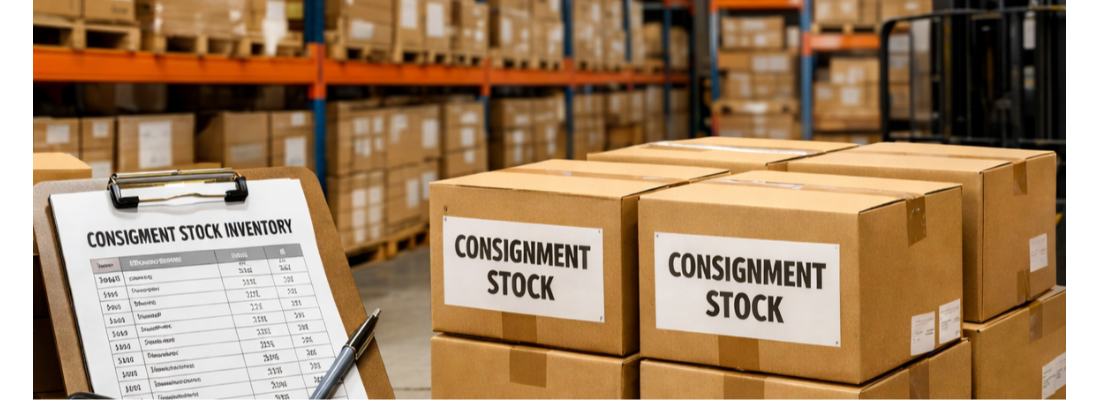
The Inventory You Own — but Can’t Always Use
The real struggle with consignment stock isn’t just tracking it or finding space for it. It’s the quiet tension of having inventory on hand that consumes space, effort, and accountability—without truly being yours. Many businesses find themselves wondering why shelves are full, yet cash flow feels tight and control seems limited.
So, the core question becomes: how can consignment stock be managed in a way that reduces risk, improves visibility, and turns shared inventory into a strategic advantage rather than a hidden burden?
The Business Impact & Value
When managed strategically, consignment stock can shift from a passive holding arrangement into a powerful commercial lever. It reduces upfront capital investment, stabilizes supply availability, and strengthens partnerships between suppliers and distributors.
By paying only when goods are sold or consumed, businesses preserve working capital while maintaining service levels—an advantage that directly improves cash flow, forecasting accuracy, and customer satisfaction. In essence, consignment stock redistributes financial risk while enabling growth without immediate balance-sheet pressure.
Tactical Benefits
At an operational level, consignment stock delivers clear and measurable gains. It improves inventory responsiveness by positioning products closer to the point of use, shortens replenishment cycles, and reduces stock-out risk.
Sales teams benefit from faster fulfillment, procurement gains flexibility, and finance teams enjoy more predictable cost recognition. When supported by strong visibility and controls, consignment arrangements also simplify demand planning and enable more informed, data-driven negotiations with suppliers.
The Opportunity Cost of Inaction
Failing to actively manage consignment stock carries hidden—but compounding—costs. Poor visibility can lead to excess inventory, ownership disputes, write-offs, and missed sales opportunities.
While capital may appear preserved on paper, inefficiencies quietly erode margins and strain supplier relationships. Over time, what could have been a competitive advantage turns into an operational blind spot—one that limits scalability, slows decision-making, and leaves real value unrealized.
Defining the Business Process
What Is Consignment Stock?
Consignment stock is a structured inventory arrangement where goods are physically held by one party—typically a customer, distributor, or retailer—while legal ownership remains with the supplier until the stock is consumed, sold, or otherwise contractually triggered.
The business process defines how consigned goods are received, stored, tracked, consumed, invoiced, and reconciled, ensuring clarity across ownership, financial recognition, and operational responsibility.
Illustrative Example
Consider a manufacturing company that relies on critical components from a key supplier. Instead of purchasing and holding large quantities upfront, the supplier places components directly at the manufacturer’s facility as consignment stock.
The manufacturer draws from this stock as production requires, and ownership transfers only at the point of consumption—triggering invoicing. This arrangement ensures material availability while allowing the manufacturer to conserve cash and the supplier to secure ongoing demand.
The High-Level Process
At a high level, the consignment stock process follows a clear and repeatable flow:
- The supplier delivers goods to a designated consignment location.
- Inventory is recorded as consigned, not owned, by the receiving party.
- Stock levels are continuously monitored and reconciled.
- Goods are issued, sold, or consumed based on operational needs.
- Ownership transfers upon usage or sale, triggering billing and financial posting.
- Periodic audits and settlements ensure accuracy and mutual trust.
This defined process transforms consignment stock from an informal agreement into a controlled, auditable, and value-driven business mechanism.
Business Context: Who Needs Consignment Stock?
Target Audience
Consignment stock is particularly valuable for manufacturers, distributors, retailers, and service-driven organizations that rely on consistent product availability while minimizing capital lock-up.
It is especially relevant where demand variability is high, lead times are long, or supplier relationships are strategic rather than transactional. Capital-intensive industries, fast-moving consumer markets, and mission-critical supply chains often rely on consignment models to balance availability with financial discipline.
Tipping Points for Consideration
Organizations typically explore consignment stock when inventory carrying costs grow faster than revenue, when stock-outs begin to impact customer trust, or when cash flow constraints limit growth.
Other tipping points include rapid scaling, expanding product portfolios, or increased pressure to improve working capital efficiency. At these moments, consignment stock shifts from a “nice-to-have” option to a vital lever for operational resilience.
Process Risks and Mitigation
Inventory Visibility Risk
One of the most common risks with consignment stock is poor visibility. Without clear tracking, businesses can lose sight of what is consigned versus owned, leading to reconciliation issues and financial discrepancies.
This risk is mitigated through well-defined ownership rules, real-time inventory tracking, and system-driven reporting that clearly distinguishes consigned stock at every stage.
Stock Damage or Loss Risk
Because goods are physically held by one party but owned by another, responsibility for damage, obsolescence, or loss can become unclear.
Clear contractual agreements, designated storage locations, and regular audits reduce disputes and protect both parties. Strong process controls create accountability without undermining trust.
Pricing Complexity Risk
Consignment arrangements can also introduce pricing challenges, particularly when costs fluctuate or holding periods are long. Misaligned pricing rules can result in margin erosion or invoicing disputes.
This risk is mitigated by predefined pricing triggers, transparent valuation methods, and automated settlement mechanisms tied directly to consumption or sales events.
Conclusion
Consignment stock is not simply an inventory tactic—it is a strategic business process. When designed and managed correctly, it strengthens cash flow, improves supply reliability, and deepens supplier partnerships.
The difference between value creation and value leakage lies in clarity, control, and execution.
Ready to turn consignment stock into a strategic advantage?
Discover how Augative and AugTool can help you control costs, improve visibility, and strengthen supplier relationships - while ensuring you only pay for what you use.
Click on this link to schedule a demonstration: